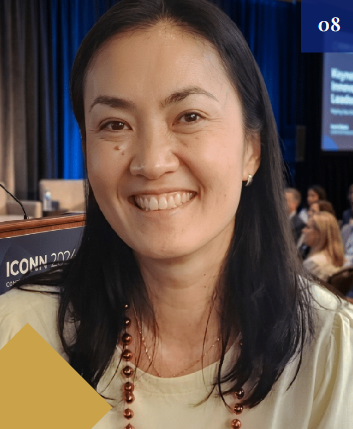
JAKARTA – In the era of rapidly advancing generative artificial intelligence (GenAI), the presence of Prof. Sandra Marika Kaneko-Marques, Ph.D., from São Paulo State University (UNESP), Brazil, added a crucial international dimension to the conference organized by the English Language Education Study Program Association (APSPBI). As an academic from one of South America’s leading research universities, Prof. Kaneko-Marques’s involvement bridged a Global South perspective between Brazil and Indonesia in responding to the dynamics of educational technology. Her expertise in digital literacy and teacher education resonated on a global scale, affirming that cutting-edge technology must not displace the human essence in the teaching and learning process.
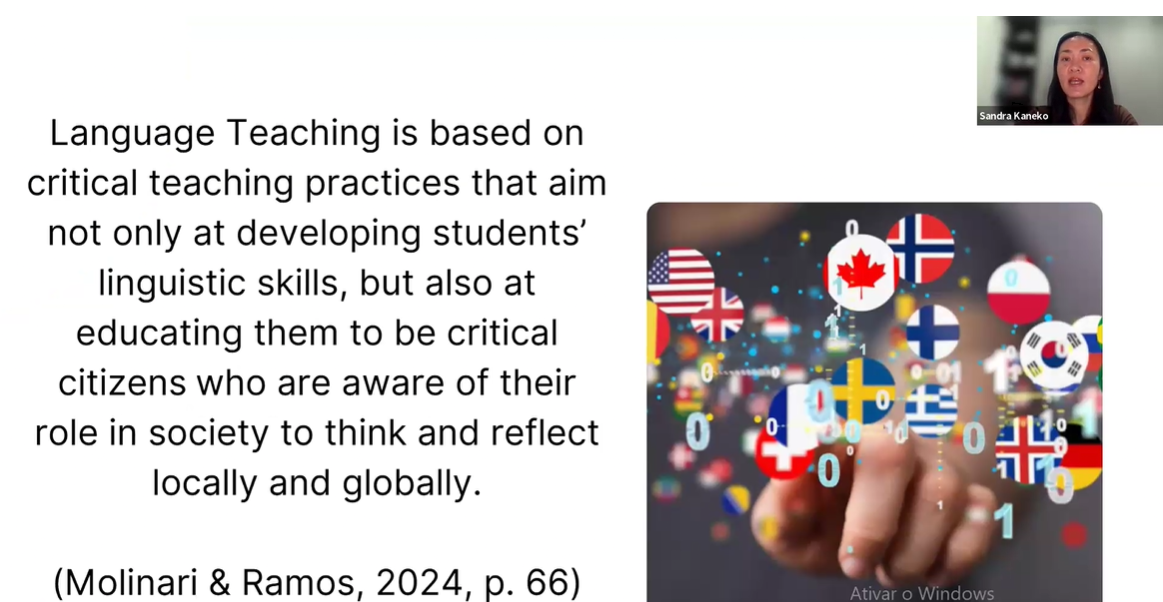
During her presentation titled “Teachers at the Center: Humanizing English Language Education in the Age of AI,” Prof. Kaneko-Marques emphasized that language teaching aims to shape critical citizens who are aware of their roles in both local and global societies. The core of her presentation highlighted several key points:
The Evolution of Pedagogical Technology: The development of teaching aids—ranging from blackboards and books to Computer-Assisted Language Learning (CALL), Emergency Remote Teaching (ERT), and GenAI—must be understood as an expansion of the pedagogical repertoire, rather than a replacement for the educator.
Opportunities and Risks of GenAI: Although GenAI offers immediate feedback, personalized learning, and automated tutoring, its uncritical use risks leading to teacher de-skilling, dependency, and inequitable access, alongside ethical threats such as algorithmic bias and plagiarism.
Prompt Engineering as a New Digital Literacy: The ability to craft and refine prompts has evolved from a mere technical interaction into a core digital literacy skill that teachers must possess to effectively evaluate the outputs of large language models.
Teacher Agency as the Ultimate Goal: The focus of teacher education must shift from merely training educators to use technology toward empowering teacher agency, enabling them to question, evaluate, select, adapt, create, and reflect upon the use of AI in their classrooms.
The involvement of Prof. Sandra Kaneko-Marques demonstrates the robust cross-continental academic network established by APSPBI. Through her critical insights, she urged international English language educators not to focus solely on the sophistication of AI, but to consistently position the teacher as the ethical and pedagogical anchor within the classroom.
APSPBI which stands for Asosiasi Program Studi Pendidikan Bahasa Inggrisis a professional organisation for English Language Education Study Programs(ELESP) in Indonesia. Founded in […]
JAKARTA – For English as a Foreign Language (EFL) students, language acquisition now extends beyond grammatical accuracy; it fundamentally requires the competence […]