The Theoretical Praxis Compass: Integrating Digital-Humanist Futures, Decolonial Policy, and ELT Innovations in Indonesia
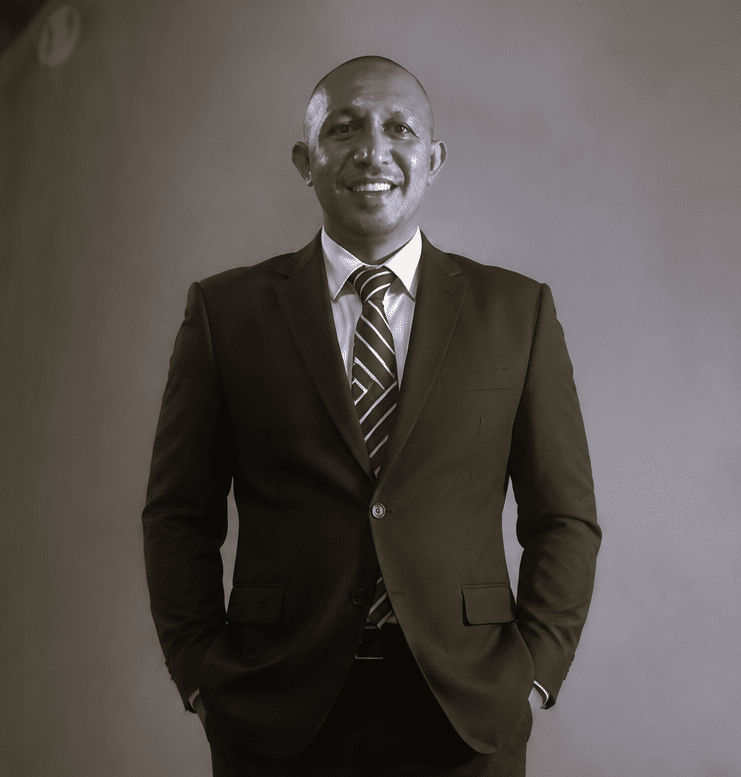
Thobias Sarbunan, M.Pd | Member of APSPBI (Lecturer of English Language Education Study Program/ Faculty of Christian Education/ Institut Agama Kristen Negeri Ambon)
Editorial Note: This article has been reviewed and approved for publication by the APSPBI Editorial Board to ensure academic rigor and relevance.
A persistent fragmentation haunts Indonesian ELT: methodological trends chase Western benchmarks, while Kurikulum Merdeka struggles to accommodate both digital acceleration and local wisdom. One of the arguments that is made in this article is that no one topic, such as AI literacy or certification, can be modified in isolation. Instead, a comprehensive theoretical praxis model is proposed, one that repositions all five themes within a recursive cycle of critical reflection, situated action, and systemic feedback. As a result of the fact that it is written without citations in order to force original synthesis to be given, this research represents a considerable divergence from studies that are conducted in the checklist manner.
The False Separation of “National” and “International” Trends
Methodological innovations in applied linguistics and literature are often imported as ready-made solutions. The implementation of task-based language instruction or translanguaging, for example, is being eagerly picked up. Despite this, their inability to meet the ecological concerns of Indonesian classrooms is frequently disregarded. While worldwide English language teaching is moving toward critical racial pedagogy and queer linguistics, a critical evaluative posture indicates that literature education continues to be mired in the formalism of New Criticism that has been prevalent in recent years.
What is urgently needed? Instead of rejection, methodological creolization is being used. From this insight, the comprehensive model begins: International trends must be filtered through local historical materiality. If this does not occur, innovation will only be imitation.
Policy as Living Laboratory: Kurikulum Merdeka Under the Scalpel
The policies that govern education are almost never considered to be empirical evidence. Here, Kurikulum Merdeka is examined not as a document but as a contested terrain. Despite the fact that the curriculum embraces independence, accreditation authorities insist on standardized student results. This contradiction is productive—but only if institutional policies are redesigned as hypotheses to be tested, not dogmas.
Within this context, the use of passive voice is intentional: One thing that has been noted is that schools that have good accrediting ratings often give up project-based learning in favor of measures that are audit-friendly. Because of this, the laws that govern higher education need to be reevaluated such that they promote pedagogical risk-taking. Otherwise, “merdeka” becomes ornamental.
Technology’s Double Edge: AI Without Digital Humanism
Artificial intelligence is neither a devil nor a savior. It’s common to limit digital literacy to operational abilities, such knowing how to use Canva or ChatGPT. However, a thoughtful, radical viewpoint poses the question, “Who gains when AI personalizes learning?” Whose ontologies are included into algorithms for prediction?
The use of contemporary teaching tools is contingent upon critical technical practice. In other words, AI’s training data, language biases (mostly Anglophone), and data extraction logics must all be questioned by students and educators. In the absence of this, digital education turns into a polished cage. As a result, the concept introduces a required feedback loop: a decolonial audit is necessary for each tech deployment.
Local Wisdom as Global Englishes’ Missing Link
Too often, Indonesian sociocultural values like rasa, musyawarah, and gotong royong are reduced to folklore ornaments. However, these values become epistemic resources inside Global Englishes frameworks. A student already has advanced pragmatic competency when they are able to traverse Javanese speech levels. Why isn’t this utilized?
Reciprocal integration is required by the complete model: Global Englishes liberates local practices from purist-native-speaker criteria, while local expertise alters English instruction (e.g., genre-based teaching employing lontar manuscripts). Here, reflective practice entails recording instances in which pupils code-mix without feeling guilty. Success tales from metropolitan Surabaya and rural Papua are the facts, not outliers.
Best Practices as Generative Frictions
Lastly, classroom obstacles and academic reflections are reframed as generating frictions rather than as joyful tales or issue lists. Digital storytelling projects that record endangered languages via English are one example of the unexpected achievements that have resulted from collaborative efforts across study programs (e.g., ELT + Anthropology + Informatics). Another example is a university in East Java that included student-led criticisms about curricular rigidity into its accreditation self-study.
What may be inferred from these? because best practices are not blueprints that can be replicated. They are situational accomplishments that are always tentative. Therefore, unless failure and contestation are also told, the model rejects the “success story” genre.
Toward the Comprehensive Model: A Cyclical Praxis Framework
Now, each of the five themes is situated within a single recursive structure:
Global Trends → Local Filter (Socio-cultural Values + Policy Constraints) → Technology as Mediator (Critically Audited) → Reflexively Documented Classroom Praxis → Systemic Feedback (Into Policy & Accreditation)
There is no assertion of a linear hierarchy. There might be disruptions at any time. However, any methodological innovation is already a policy declaration, according to the model’s radical assertion. Already, every digital gadget is a cultural text. Globalized standards are already being criticized by every local wisdom practice.
Conclusion
There is no need for another disjointed survey for Indonesian ELT. Contradictions must be held together by a theoretical praxis compass. This publication has intended to compel unique thought by not using performative citations. You are now invited to use your own study plans to test, undermine, and improve the model. The same editing team should receive your counter-narratives. After all, praxis is a communal verb.