Elevating ELT Excellence: APSPBI and English Education Study Programs Nationwide Ratify Landmark MoA on Tridharma Collaboration
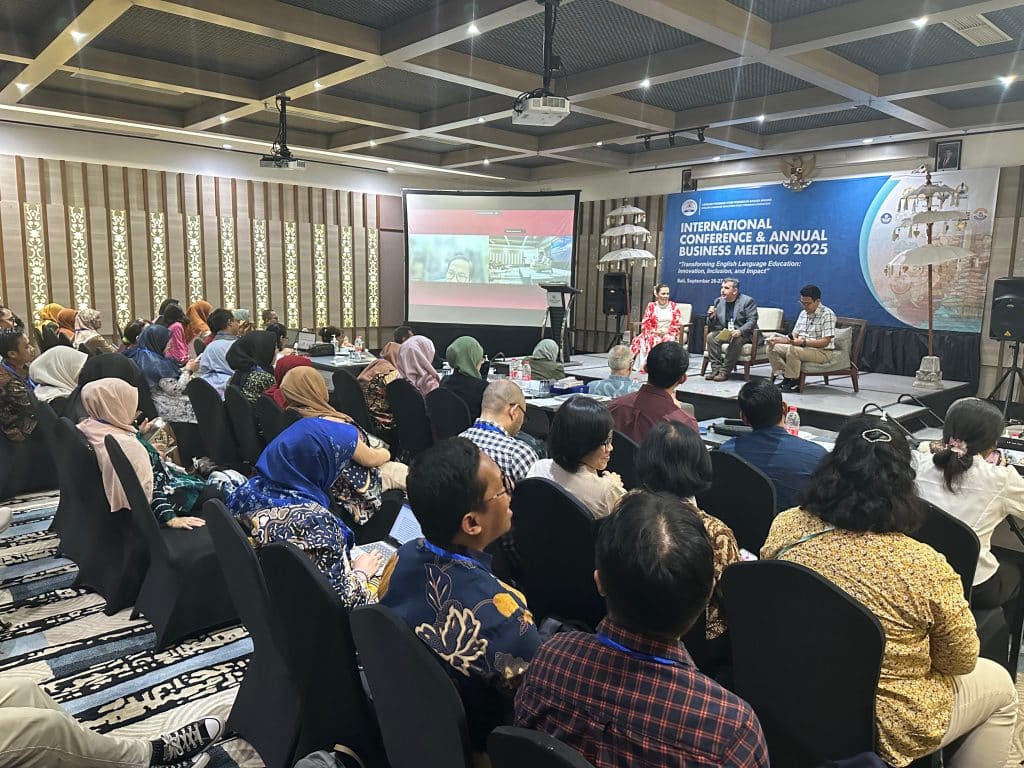
BALI, APSPBI Official Portal – In a decisive stride toward elevating the standards of English Language Teaching (ELT) and fostering robust institutional synergy in Indonesia, the English Language Education Study Programs Associations (Asosiasi Program Studi Pendidikan Bahasa Inggris – APSPBI) has officially ratified a nationwide Memorandum of Agreement (MoA) with English Education (PBI) and Tadris English (TBI) study programs across the archipelago. This landmark agreement establishes a comprehensive framework for strategic cooperation intended to catalyze academic growth and institutional excellence over the next three years (2025–2027).
The accord was formally executed by Dr. Ummi Khaerati Syam, S.Pd., M.Pd., the President of APSPBI, whose central secretariat is stationed at the Faculty of Teacher Training and Education, Universitas Muhammadiyah Makassar. The agreement serves as a mutual covenant among department heads to collectively leverage academic competencies and resources for the holistic advancement of both faculty members and students.
The collaborative matrix of the MoA is structurally anchored upon the three fundamental pillars of Indonesian higher education (Tridharma Perguruan Tinggi), operationalized through several strategic initiatives:
The agreement mandates a concerted effort toward cooperative curriculum development, ensuring that instructional designs across member institutions remain responsive to contemporary pedagogical shifts and technological innovations. To enrich scholarly perspectives within the classroom, the framework facilitates cross-institutional academic mobility through:
To cultivate a rigorous research culture within the Indonesian ELT community, the signatory institutions are committed to expanding the boundaries of applied linguistics and education through:
The final pillar translates theoretical and empirical advancements into actionable community outreach. Through collaborative social interventions, specialized professional training for inservice teachers, and digital literacy campaigns, the partnership aims to bridge the gap between academic research and societal development, yielding measurable, sustainable impacts on local communities.
This nationwide pact brings together a vast and highly integrated network of higher education institutions under the aegis of APSPBI. The collective commitment is reinforced by the active endorsement of numerous prominent state and private universities across Indonesia, including:
Through this highly structural framework, APSPBI aims to standardize and elevate the quality benchmarks of English education graduates in Indonesia, preparing them to be highly adaptive, ethically grounded, and globally competitive. The immediate implementation of the programs outlined in this MoA is expected to accelerate institutional accreditation and mark a transformative epoch in the nation’s English language education landscape.
Surabaya, August 22, 2026 – The English Language Education Study Programs Association (ELESPA/APSPBI) successfully launched the first day of its “Road to […]
Sulkifli, S.Pd., M.Pd | Member of APSPBI (a lecturer of English Education Department at Universitas Muhammadiyah Makassar) Editorial Note: This article has […]
JAKARTA – Amid the rapid technological disruptions in education, the APSPBI International Conference & Annual Business Meeting 2026, held at the Millennium […]