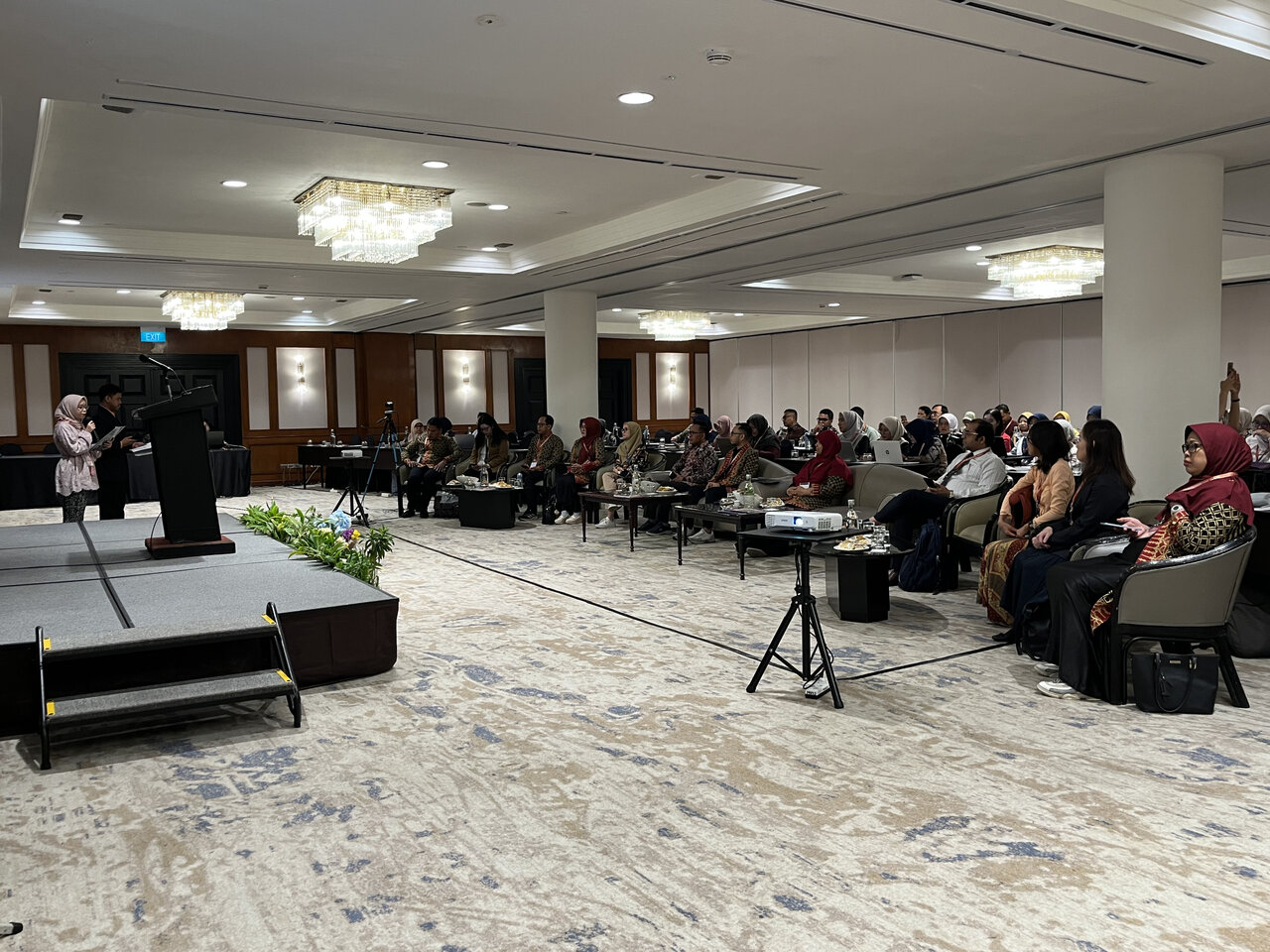
Furthermore, Prof. Bashir highlighted the paradigm shift toward a posthumanist pedagogy in the era of Artificial Intelligence (AI). He elaborated that in this phase, learning is no longer centered solely on human dominance; rather, it involves a shared agency between humans and machines, thereby fundamentally altering the concepts of academic integrity and digital literacy. Although AI offers highly adaptive and personalized learning, Prof. Bashir warned of the danger that AI could manifest as a new tool of colonialism. These potential threats include the domination of Western languages and cultural norms in algorithms, global data collection without consent (data colonialism), and the technological dependency of low-resource countries on developed nations.
As a strategic solution, he emphasized the urgency of ethical AI integration, referencing the AI Competency Framework established by UNESCO. AI must be positioned as an “Intelligent Assistant” that enriches the learning experience, rather than a replacement for a teacher’s critical judgment and empathy. Concluding his compelling address, Prof. Bashir reminded educators to return to the essence of Bloom’s Taxonomy by prioritizing the Affective Domain. He asserted that in an increasingly automated educational ecosystem, Social-Emotional Learning (SEL)—which focuses on the attitudes, values, and psychological well-being of both students and teachers—remains the fundamental key to preserving humanity in English language education.