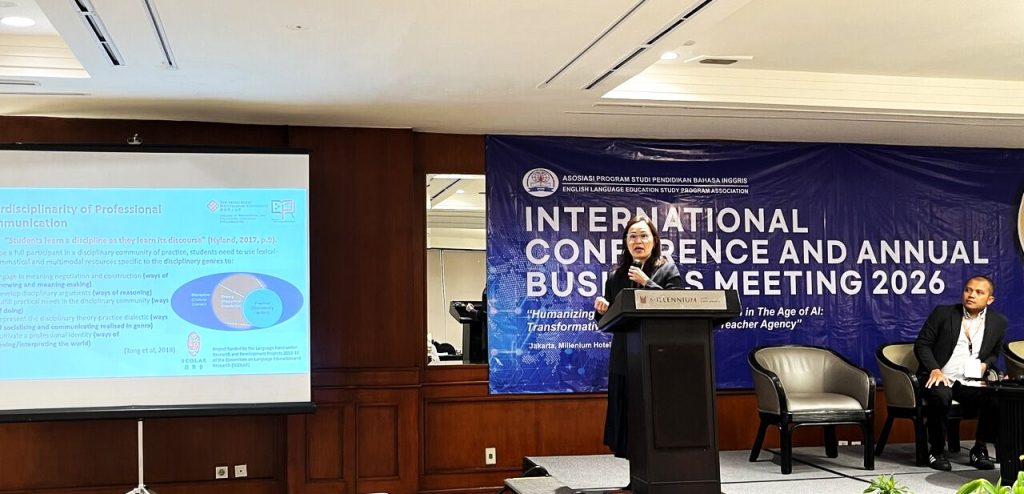
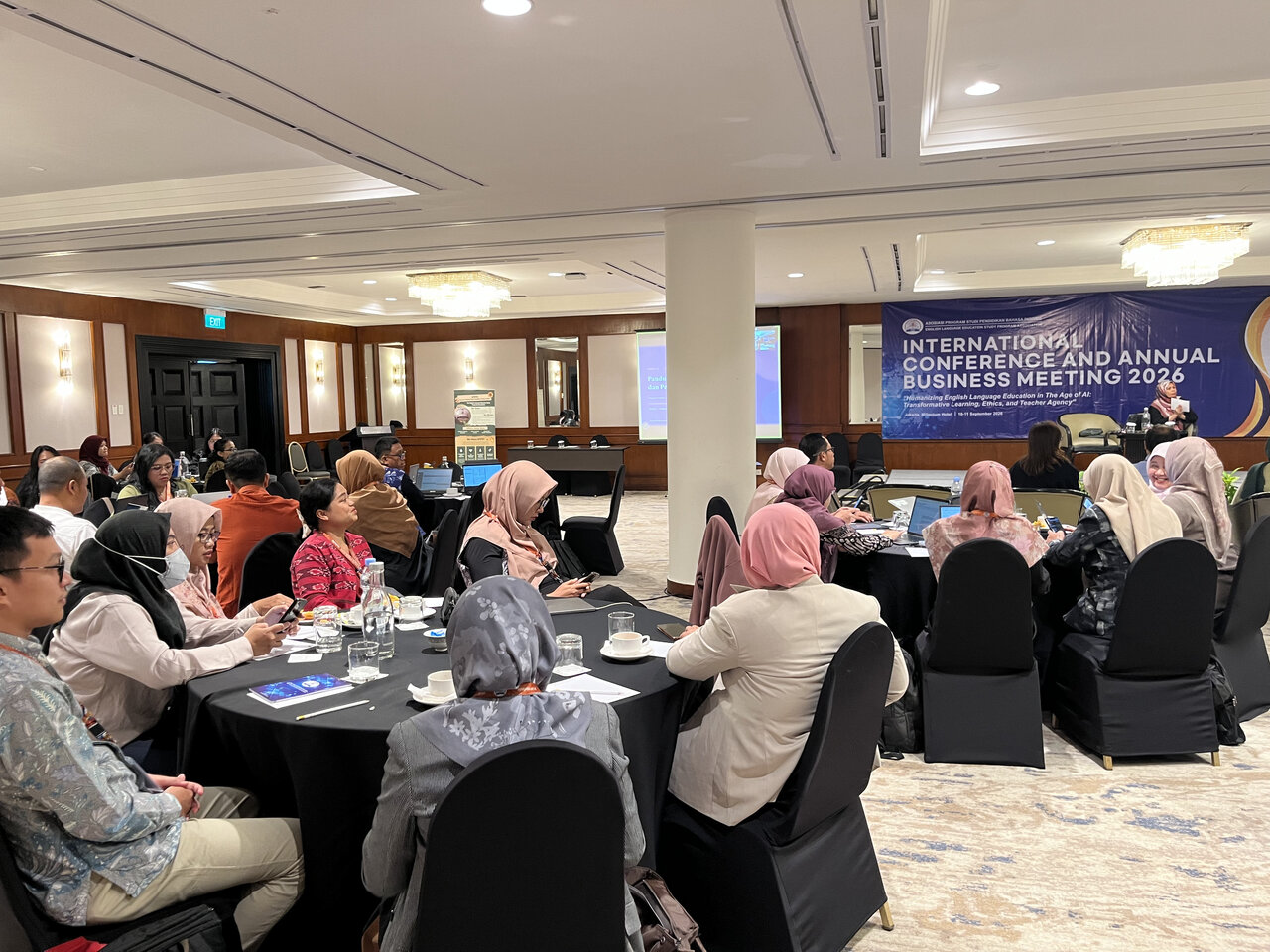
In her presentation, titled “Platformising English Assessment: Affordances, Alignment and Agency,” Dr. Tong addressed how the digitalization of higher education has fundamentally transformed the infrastructures underlying pedagogical innovation, curriculum design, and learning assessment. She emphasized that in the era of artificial intelligence, language learning is increasingly mediated by hybrid intelligent ecosystems that integrate digital platforms with embedded teaching practices.
Responding to growing concerns regarding validity, ethics, and equity in technology adoption, Dr. Tong outlined a paradigm shift in language assessment. Evaluation is moving away from merely assessing final performance toward dynamic, authentic, and process-oriented approaches centered on assessment for and as learning. This transformation requires language educators to reposition themselves as pedagogical designers capable of structuring assessment as a socially situated practice within digitally mediated environments.
To illustrate these concepts in practice, Dr. Tong highlighted three technology-mediated assessment initiatives:
An AI-Assisted Academic Writing Platform: Comprising two complementary sub-platforms—one facilitating human-AI collaborative feedback and the other encouraging self-directed learning through guided analysis of discipline-specific exemplars.
The Video-Based Interactive Language Learning and Assessment (VILLA) Platform: A system supporting self- and peer-assessment of oral presentations through live interactions and post-task evaluations, alongside screencast-based assessment of written assignments to foster critical reflection on language production.
Pedagogical Integration of Digital Platforms: An initiative exploring how platformized approaches support process-oriented language assessment, active feedback uptake, and collaborative knowledge construction.
To guide these practices, Dr. Tong proposed an evaluation framework structured around three key pillars: (i) platform affordances that enable process-based assessment of learning outcomes, (ii) the constructive alignment of teaching, learning, and platformized assessment experiences, and (iii) the cultivation of reciprocal agency among participants.
In closing, Dr. Tong emphasized that the true educational value of platformized language assessment lies not in technological novelty itself, but in its ability to enhance assessment quality and rigor by translating affordances, alignment, and agency into meaningful learning outcomes.